Jacobi Bornitii Iurisconsulti Aerarium, sive Tractatus Politicus De Aerario Sacro Civili Militari Communi & Sacratior
Jacobi Bornitii Iurisconsulti Aerarium, sive Tractatus Politicus De Aerario Sacro Civili Militari Communi & Sacratior | Libri antichi e moderni | BORNITZ, Jakob (1560-1625)
Jacobi Bornitii Iurisconsulti Aerarium, sive Tractatus Politicus De Aerario Sacro Civili Militari Communi & Sacratior
Jacobi Bornitii Iurisconsulti Aerarium, sive Tractatus Politicus De Aerario Sacro Civili Militari Communi & Sacratior | Libri antichi e moderni | BORNITZ, Jakob (1560-1625)
Metodi di Pagamento
- PayPal
- Carta di Credito
- Bonifico Bancario
- Pubblica amministrazione
- Carta del Docente
Dettagli
- Anno di pubblicazione
- 1612
- Luogo di stampa
- Frankfurt a.M.
- Autore
- BORNITZ, Jakob (1560-1625)
- Editori
- Matthiae Beckeri impensis Godefridi Tampachii (Matthäus Becke
- Soggetto
- seicento
- Stato di conservazione
- Mediocre
- Lingue
- Italiano
- Legatura
- Rilegato
- Condizioni
- Usato
Descrizione
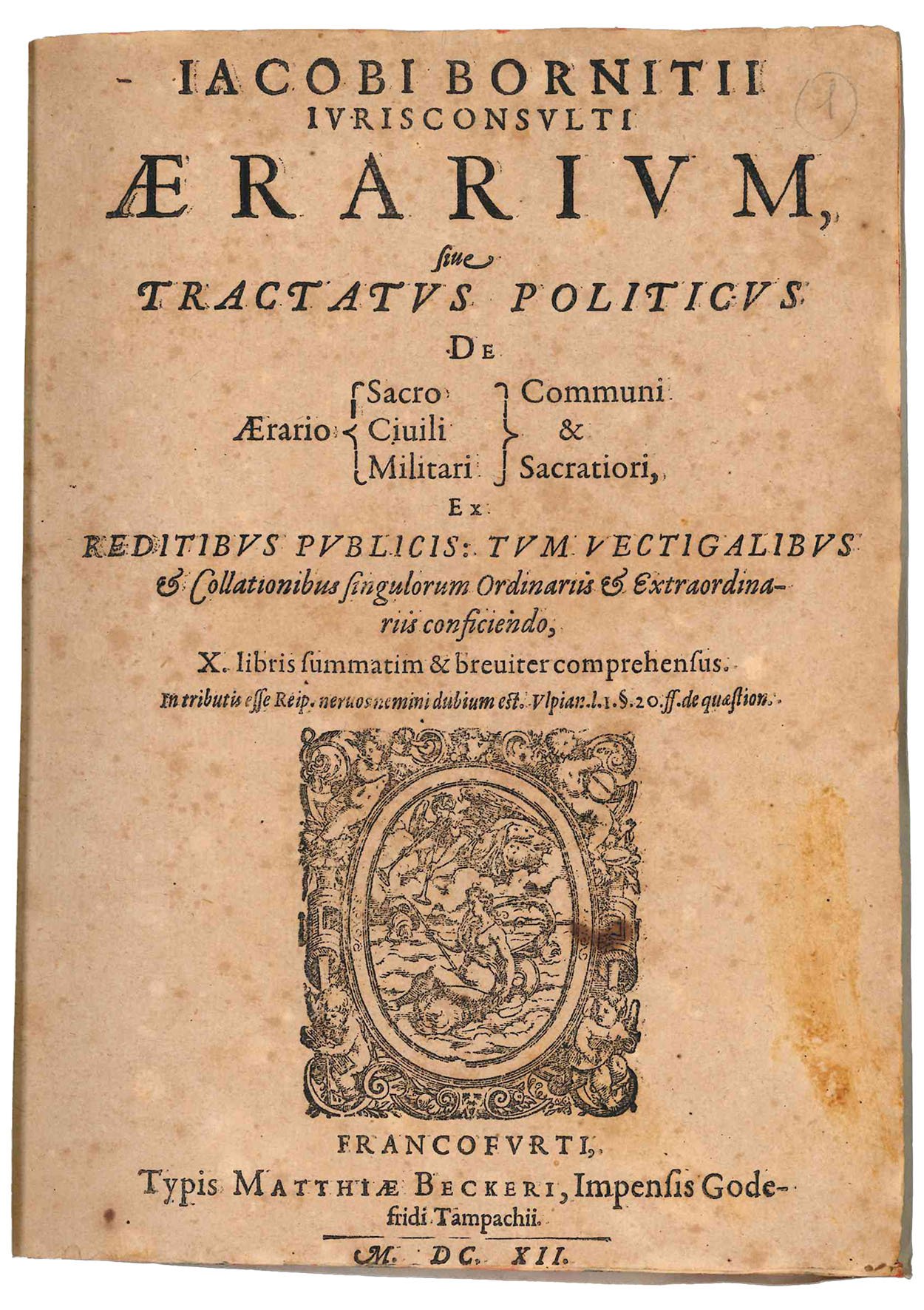
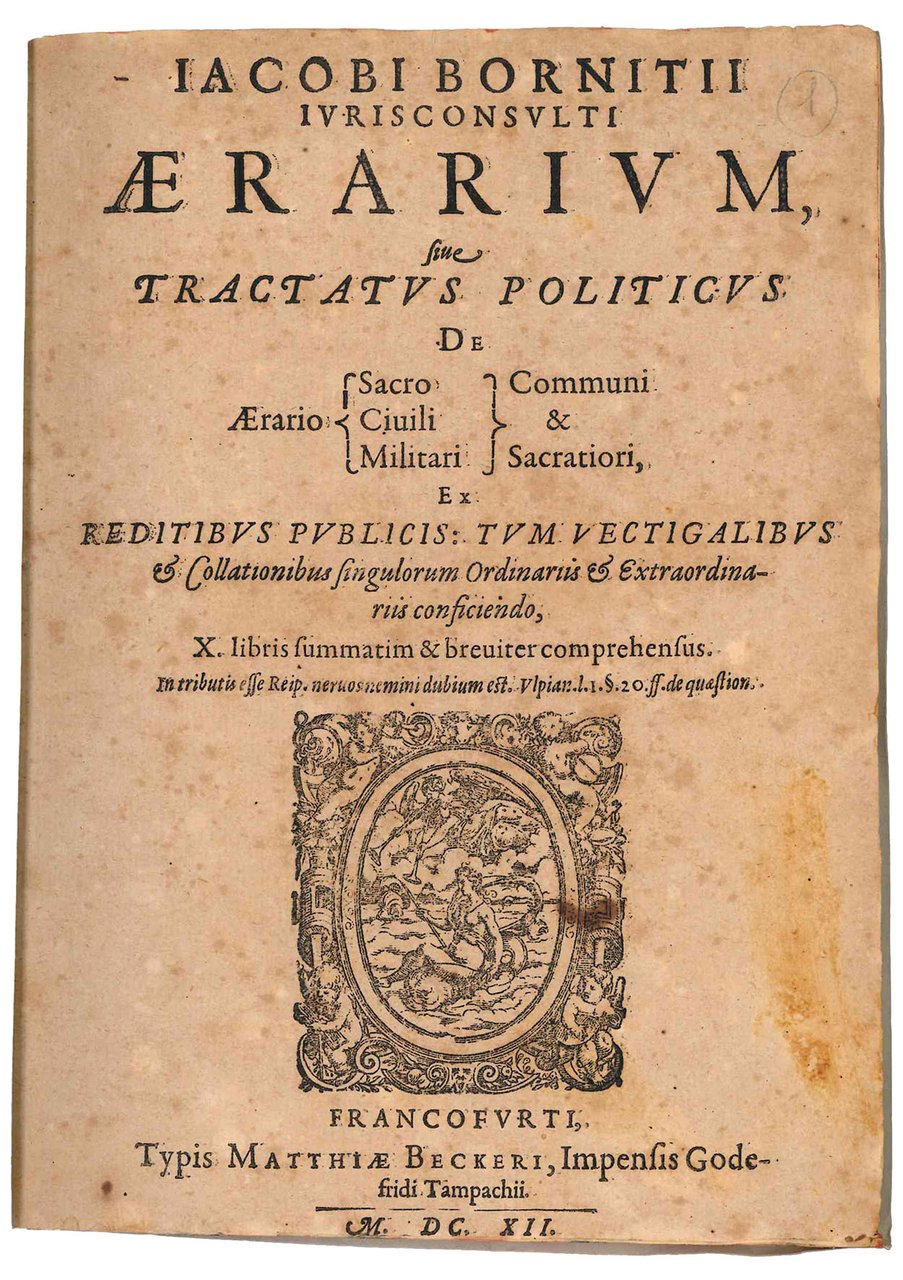
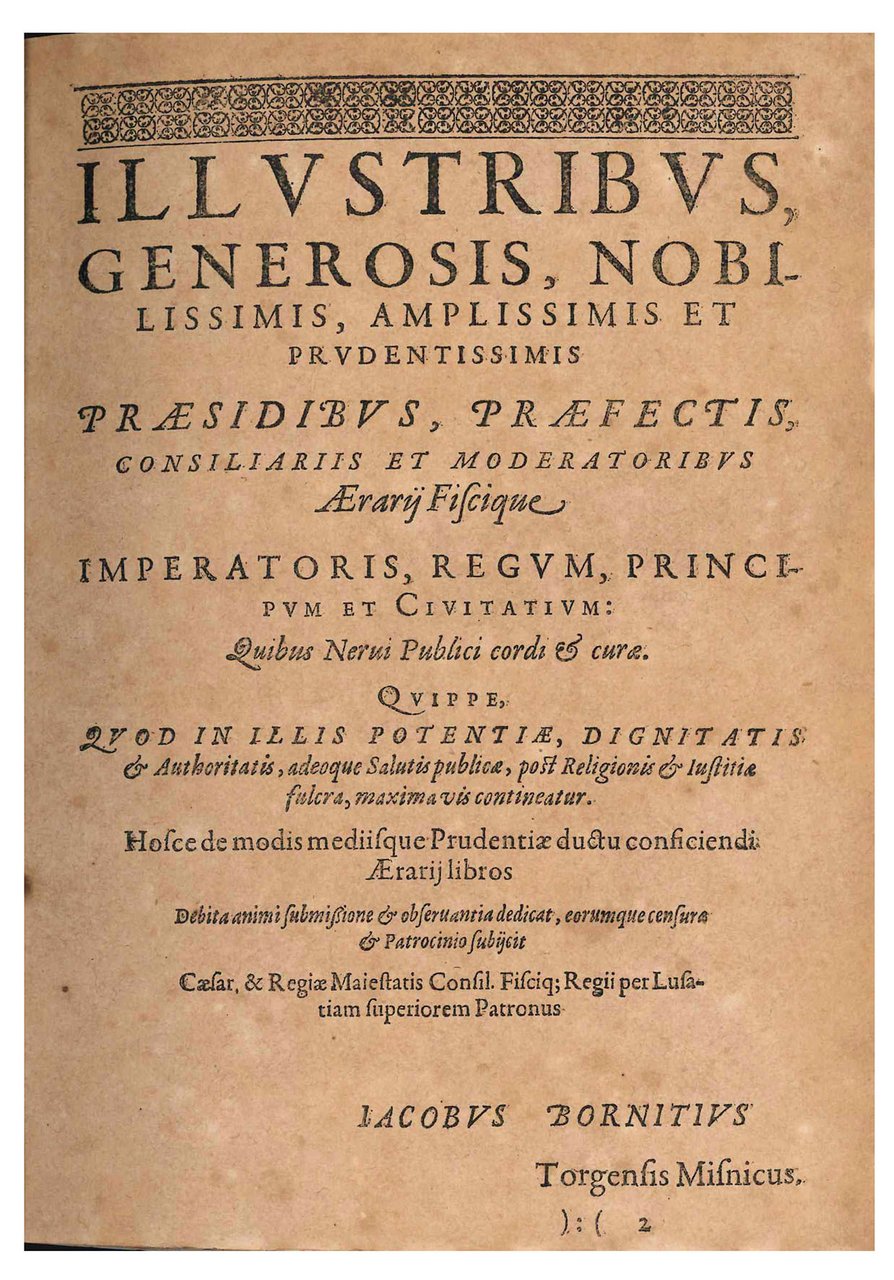
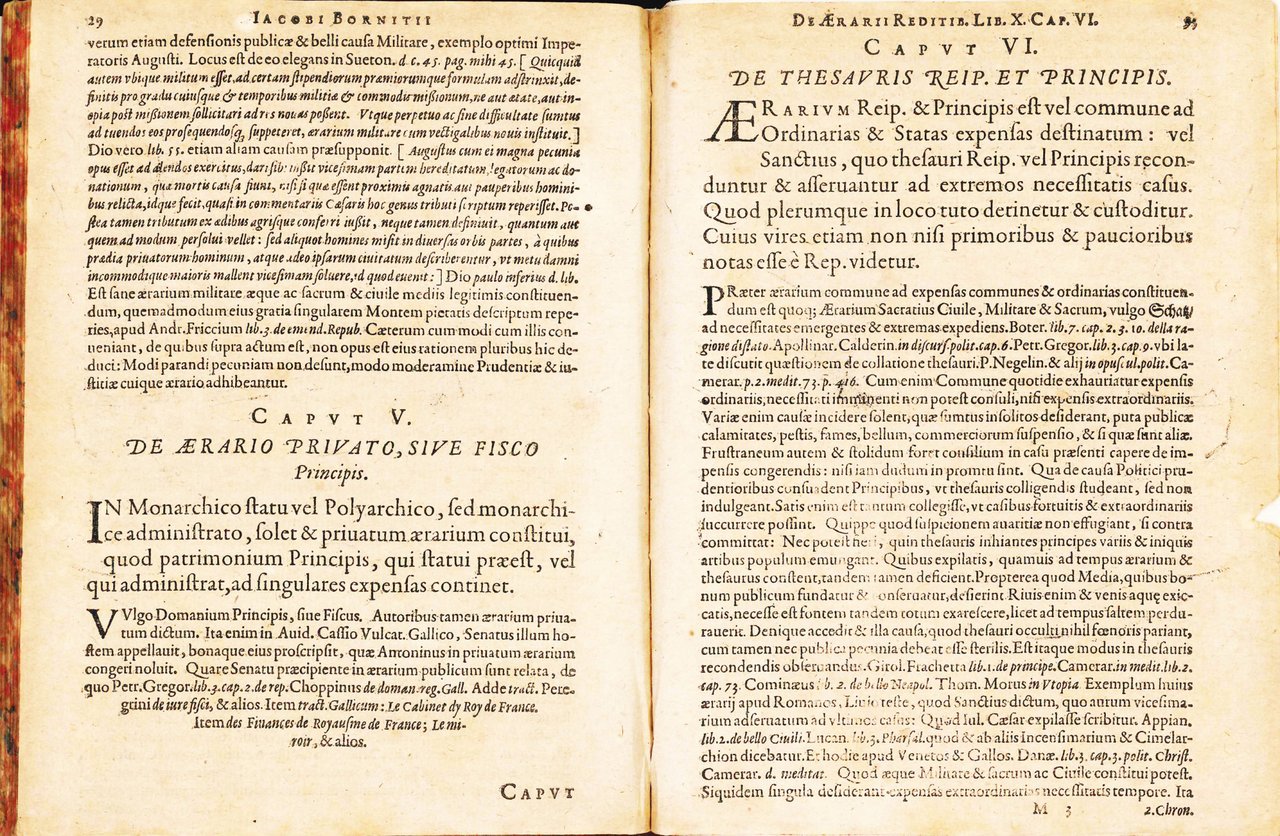
4° (195 x 150 mm). [16], 94, [1] pp. Collation: ):(-):():(⁴ A - M⁴. Modern wrappers, margins cut short and original marbled edges (heavily browned and stained). Printer's device on the title page: engraved oval within squared complex frame, repesenting a women (most likely a goddes) sorrounded by clouds and angels . Woodcut ornaments and historiated initials. The work is dedicated by the author to all the public administrators responsible of the treasury.
Aerarium, sive Tractatus Politicus De Aerario Sacro Civili Militari Communi & Sacratior is organized in:
- Adominitio ad Lectorem (XVI pages)
- Liber Primus, De ærarii reditibus publicis ordinariis (seven chapters)
- Liber Secundus, De reditibus publicis extraordinariis (ten chapters)
- Liber Tertius, De reditibus publicis qui fortuito et casu fisco accidunt (twelve chapters)
- Liber Quartus, De vectigalibus personalibus (seven chapters)
- Liber Quintus, De vectigalibus rerum et patrimonorum (thirteen chapters)
- Liber Sextus, De vectigalibus et collationibus extraordinariis (seven chapters)
- Liber Septimus, De quasi vectigalibus (three chapters)
- LIber Octavis, De vectigalibus illcitis (four chapters)
- Liber Nonus, De spontaneis collationibus et legationibus in aerarium (three chapters)
- Liber Decimus, De aerari distionctione (six chapters)
First edition. Jakob Bornitz's essay represents a significant contribution to the formation of fiscal and administrative thought in the early modern period. The text anticipates, in some respects, the later developments of German cameralism, a discipline oriented toward the rationalization of state resources and the formation of a well-skilled bureaucracy. Bornitz conceives the problem of the aerarium as a central issue for the stability and preservation of the state. From this perspective, the treatise is not limited to a technical description of revenues, but is also a theoretical reflection on the financial structure of the res publica, in which control of resources appears to be an essential condition for the exercise of sovereignty. One of the most significant aspects of the work, as the title clearly highlights, is the articulation of the public treasury into different functional typologies—sacrum, civile, militare, commune, sacratior—which reflect an internal differentiation of state finances.From an income perspective, Bornitz develops a systematic distinction between vectigalia and collationes, including both ordinary taxes and extraordinary levies. This approach is consistent with the seventeenth-century economic and political culture, in which the state was called upon to mobilize all available resources for its own strengthening.Overall, the work can be interpreted as a juridical and political synthesis of emerging fiscal theory, intertwining regulatory, administrative, and economic elements.
"Jakob Bornitz was known during his lifetime as a Doctor of Law, a learned statesman, and an imperial councilor; today, his contribution to political economic theory is particularly important. He undertook to present the national economy in a coherent and comprehensive manner, and is therefore described by Roscher as "the first systematic economist among the Germans." Specifically, B. favored the view that it was the prince's duty to promote gold and silver mining or at least to bring the absolutely necessary money (nervus rerum) into the country by favoring the export of finished goods. He was strongly opposed to the export of raw materials." ("Bornitz, Jakob" in: Neue Deutsche Biographie 2, 1955, p. 471).
Althusius - Bibliographie n.o 3804; OCLC, 256983575; Humpert, 436.