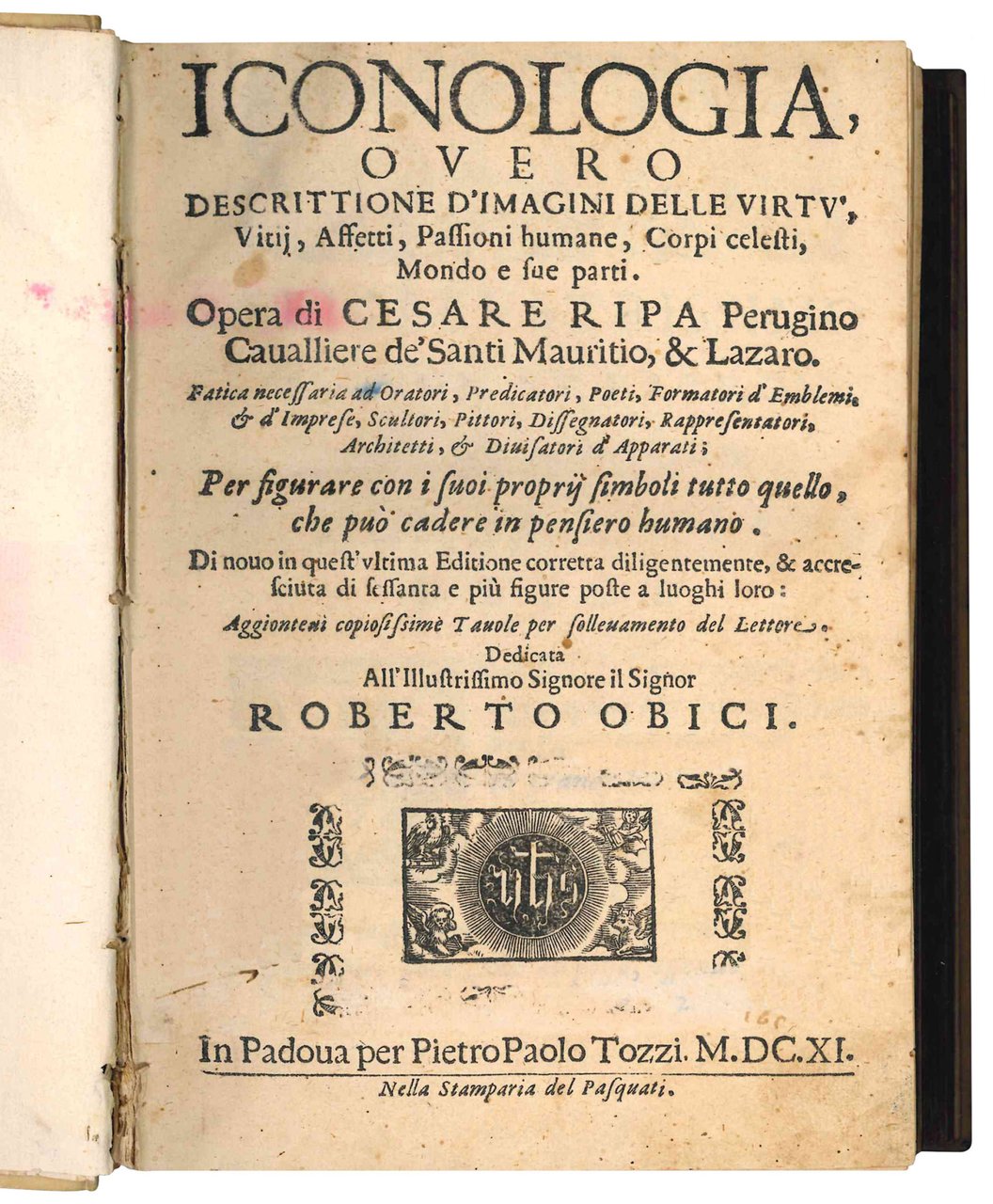
Iconologia, overo Descrittione d'imagini delle virtù, vitij, affetti, passioni humane, corpi celesti, mondo e sue parti.
Iconologia, overo Descrittione d'imagini delle virtù, vitij, affetti, passioni humane, corpi celesti, mondo e sue parti. | Libri antichi e moderni | RIPA, Cesare (ca. 1560- ca. 1625)
Iconologia, overo Descrittione d'imagini delle virtù, vitij, affetti, passioni humane, corpi celesti, mondo e sue parti.
Iconologia, overo Descrittione d'imagini delle virtù, vitij, affetti, passioni humane, corpi celesti, mondo e sue parti. | Libri antichi e moderni | RIPA, Cesare (ca. 1560- ca. 1625)
Metodi di Pagamento
- PayPal
- Carta di Credito
- Bonifico Bancario
- Pubblica amministrazione
- Carta del Docente
Dettagli
- Anno di pubblicazione
- 1611
- Luogo di stampa
- Padova
- Autore
- RIPA, Cesare (ca. 1560- ca. 1625)
- Editori
- Per Pietro Paolo Tozzi nella stamparia del Pasquati
- Soggetto
- seicento
- Stato di conservazione
- Buono
- Lingue
- Italiano
- Legatura
- Rilegato
- Condizioni
- Usato
Descrizione
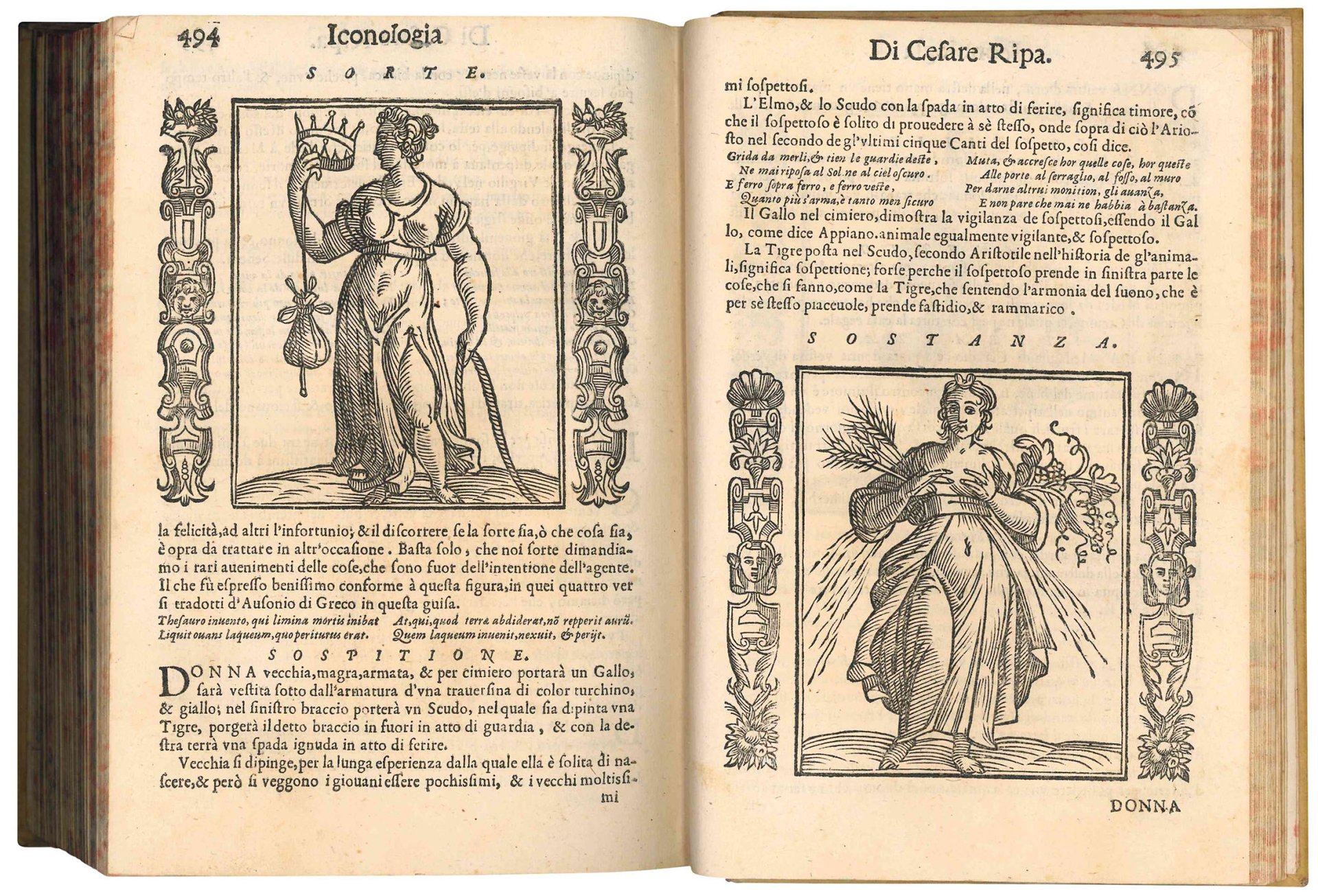
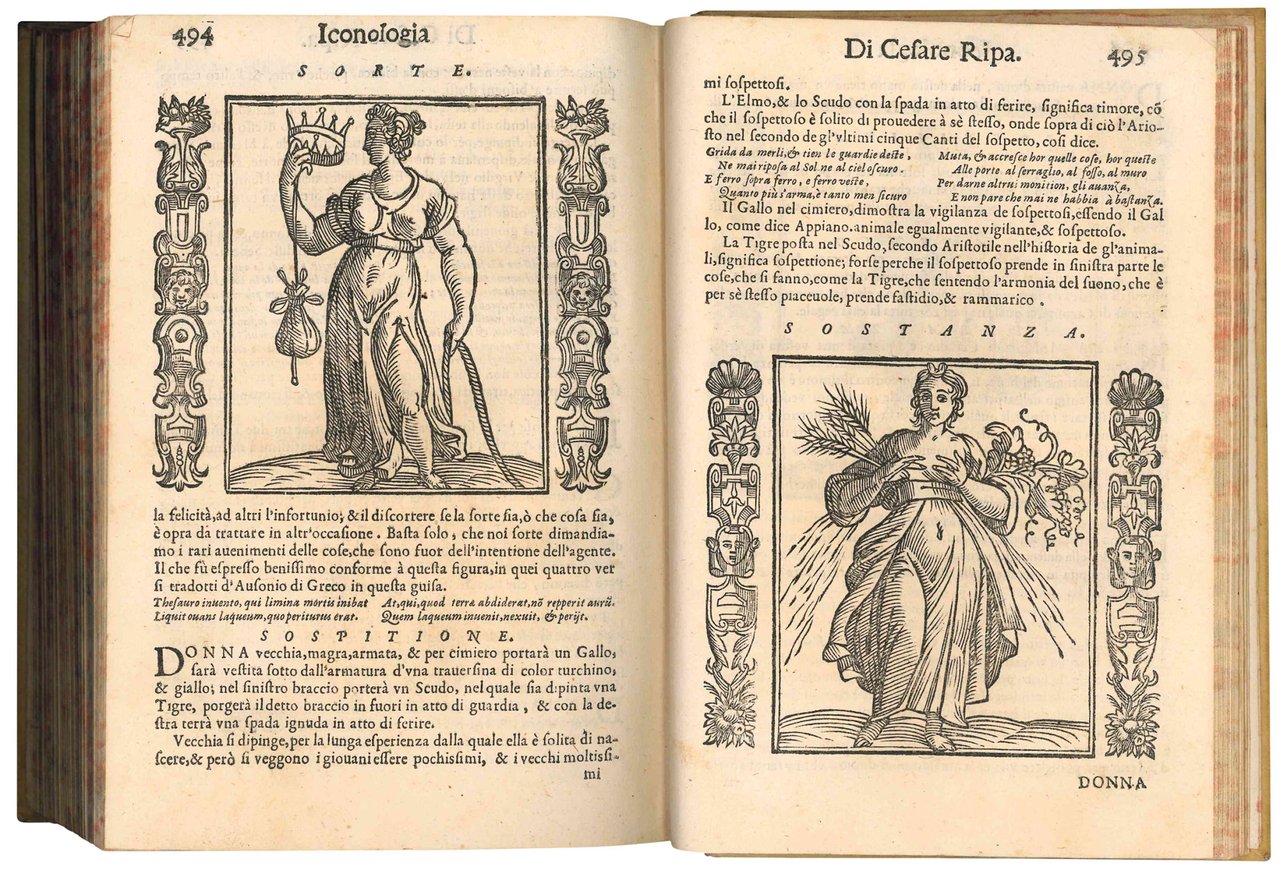
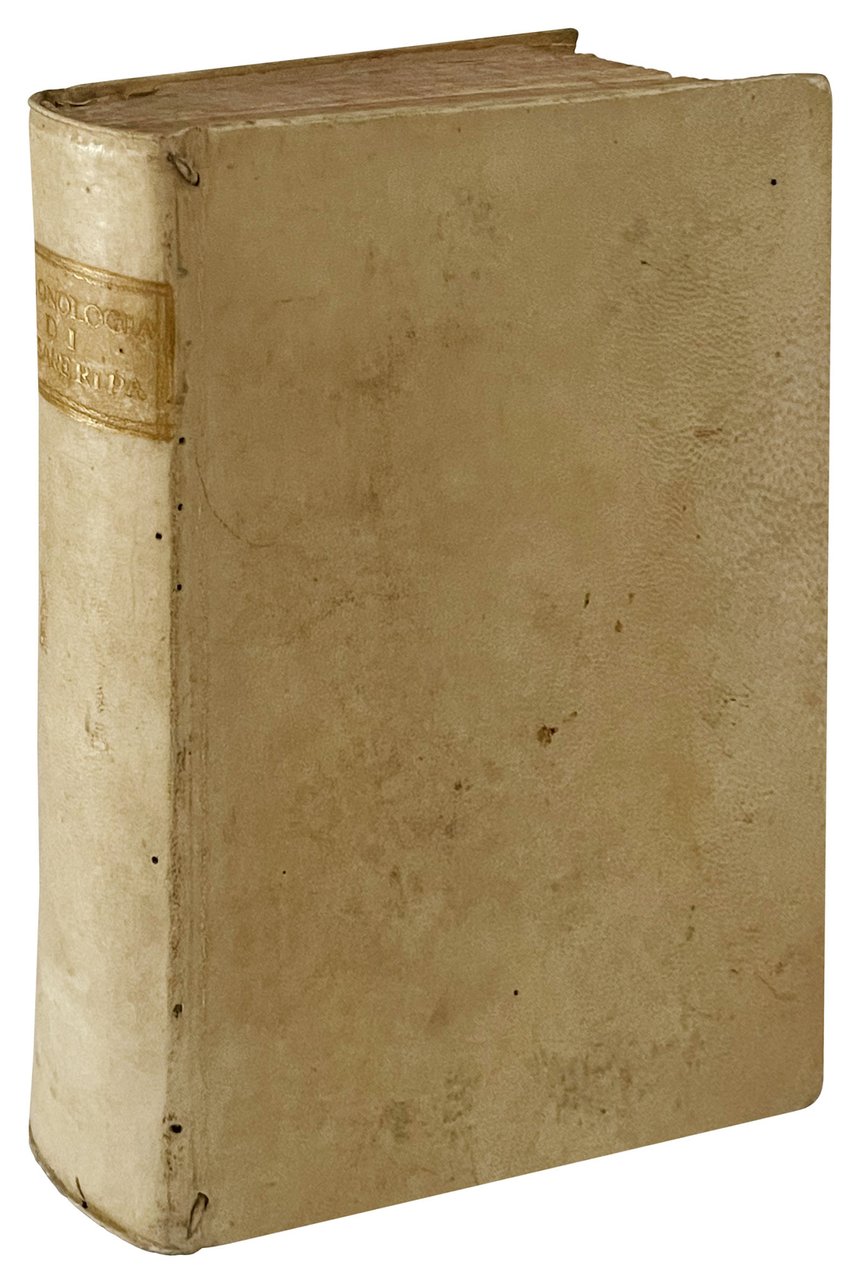
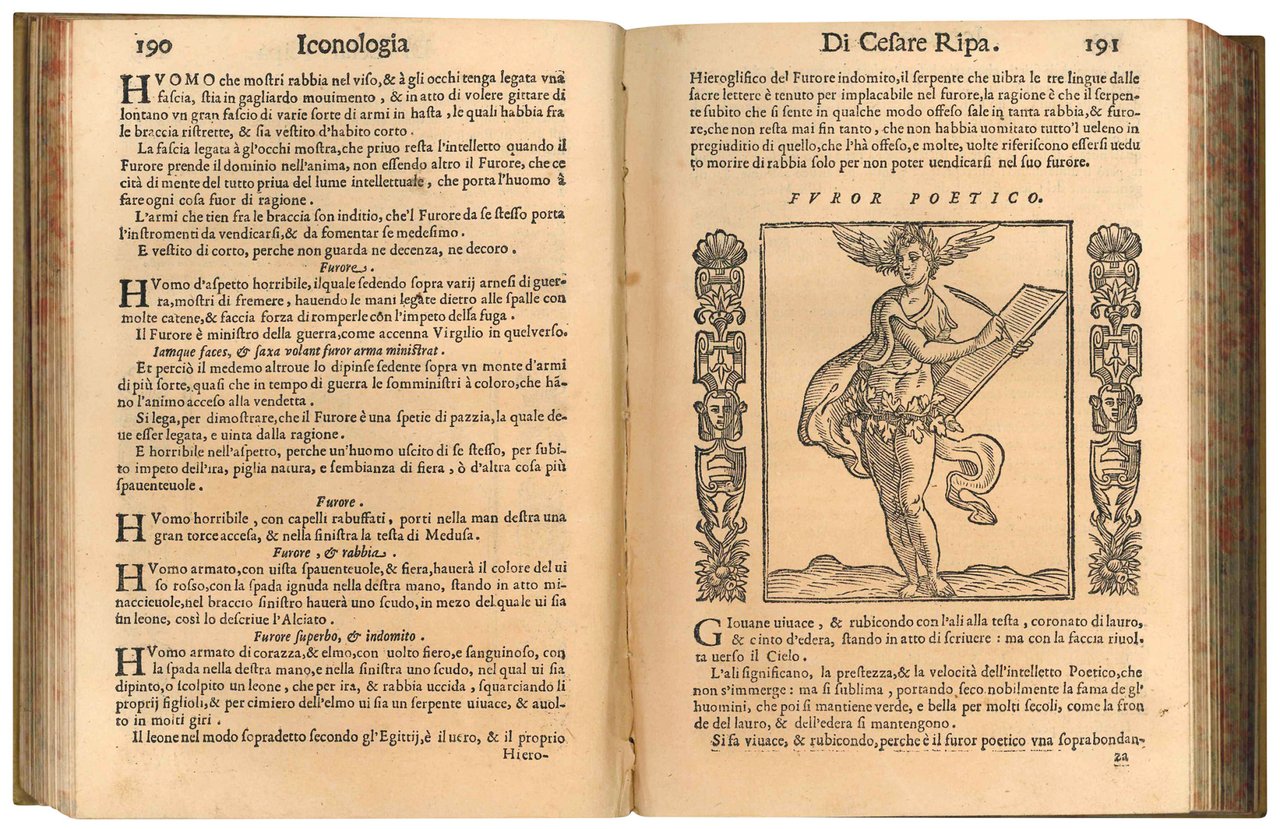
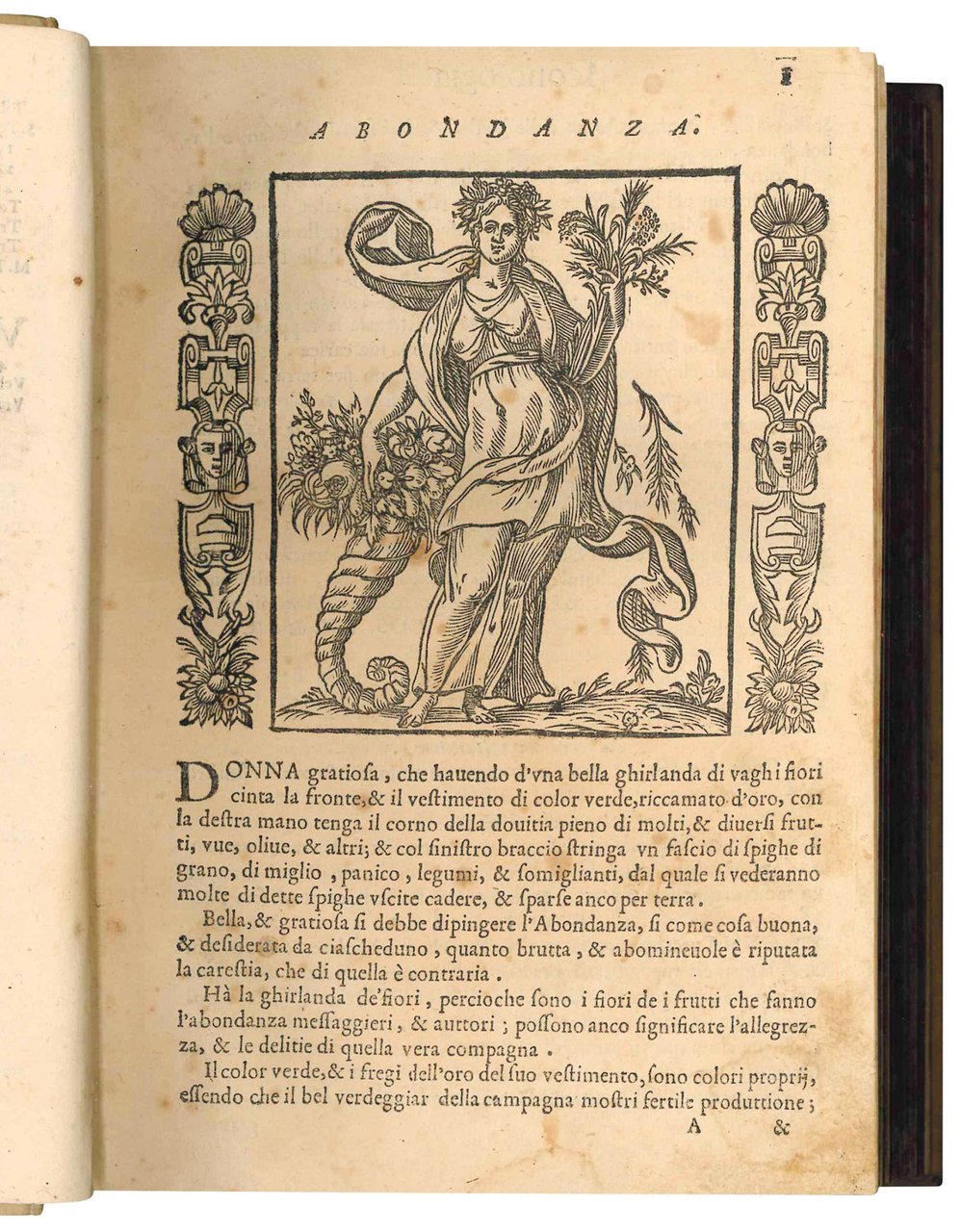
4to (200 x 140 mm). [32], 552 pp. Collation: a-d⁴ A-Z⁴ Aa-Zz⁴ Aaa-Zzz⁴. 18th-century stiff vellum binding, lettering piece on spine, marbled edges. Woodcut printer's device on title page (monogram of Christ in the radiant host). Woodcut head- and tail-pieces, historiated initials and 200 illustrations in text. Restoration to the title page marginally affecting the border around printer's device. Margins cut short affecting the current title on a few leaves. Lightly foxed, but overall a good copy.
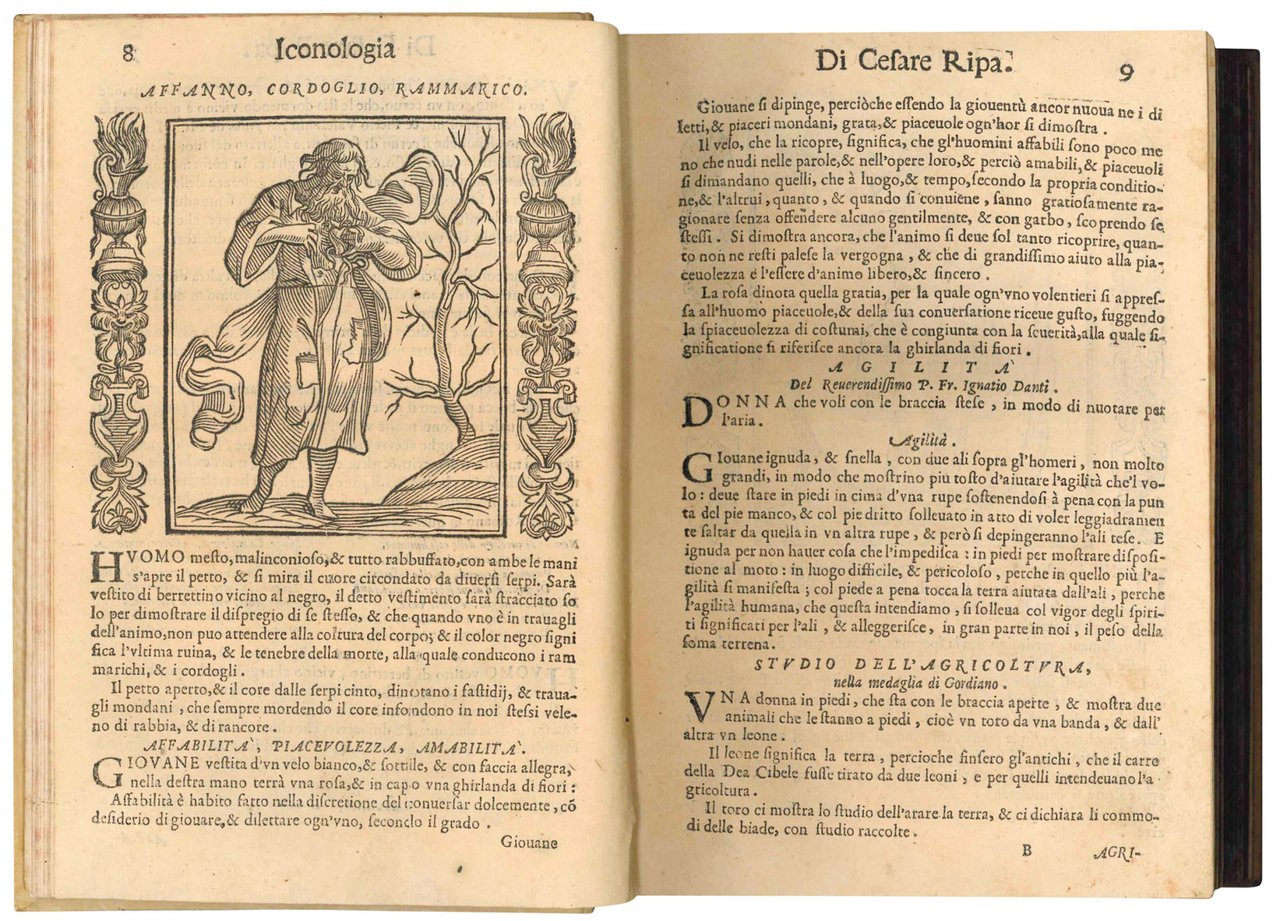
Fourth edition overal, but second illustrated edition, edited by Paolo Tozzi, a Paduan publisher, and printed by Donato Pasquati. Despite being published without his consent, Ripa expressed his satisfaction with the initiative and, in a letter published in the 1618 edition of the Iconologia, cordially thanked Paolo Tozzi and sent him a portrait of himself as a sign of gratitude. Compared to the first illustrated edition (Rome, 1603), only one allegory was added (the total number was 1,086). The text underwent few changes, while new woodcuts were used for the illustrations, modifying previous illustrations and adding some new ones. The volume is dedicated from Tozzi to the Paduan nobleman Roberto Obici. It will follow a second Tozzi 's edition, published in Padua in 1618: when Cesare Ripa learned that the Paduan publisher was preparing a second edition of his Iconologia, he sent him a series of additional descriptions of the existing allegories and about fifty new personifications (bringing the total number of allegories to 1,261).
First published in Rome in 1593, the Iconologia by Cesare Ripa (c. 1555–1622) stands as the definitive encyclopedic manual of allegorical imagery and personification in early modern European art. Initially released without illustrations, Ripa's treatise, alphabetically arranging over seven hundred abstract concepts, virtues, vices, and human passions, was rapidly expanded in subsequent illustrated editions. Born in Perugia and working as a court courtier and master of ceremonies for Cardinal Anton Maria Salviati in Rome, Ripa was a non-professional scholar deeply immersed in Roman and Sienese literary academies. By meticulously synthesizing classical mythography, Egyptian hieroglyphics, numismatic sources, and Renaissance emblem books, he provided verbal and visual instructions on the symbolic attributes, garments, and colors required to represent abstract thought.
Italian Union Catalogue, IT\ICCU\FERE\000950; Praz, 472.