Exotericarum Exercitationum liber XV. De Subtilitate, ad Hieronymum Cardanum
Exotericarum Exercitationum liber XV. De Subtilitate, ad Hieronymum Cardanum | Libri antichi e moderni | Julius Caesar Scaliger (1484–1558)
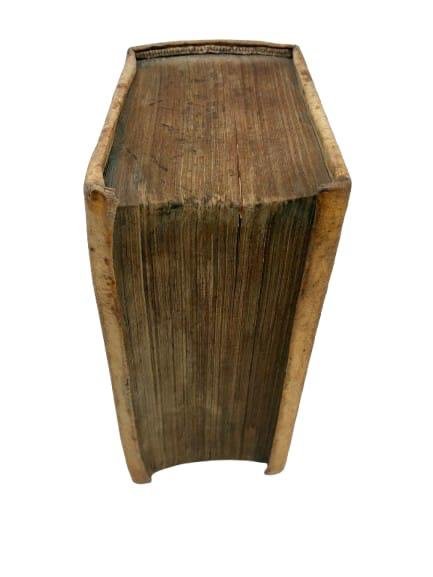
Exotericarum Exercitationum liber XV. De Subtilitate, ad Hieronymum Cardanum
Exotericarum Exercitationum liber XV. De Subtilitate, ad Hieronymum Cardanum | Libri antichi e moderni | Julius Caesar Scaliger (1484–1558)
Metodi di Pagamento
- PayPal
- Carta di Credito
- Bonifico Bancario
- Pubblica amministrazione
- Carta del Docente
Dettagli
- Anno di pubblicazione
- 1601
- Luogo di stampa
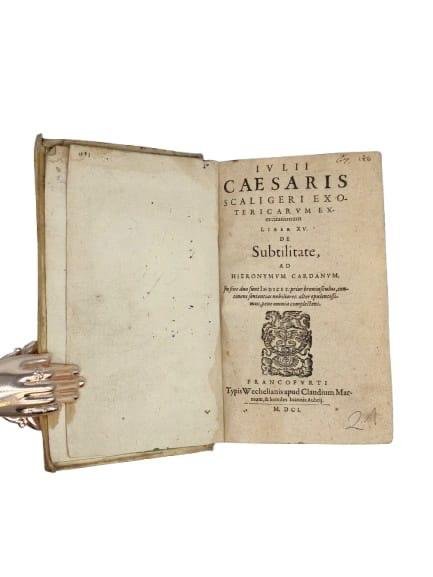
- Francofurti: Typis Wechelianis apud Claudium Marnium, & heredes Ioannis Aubrij
- Autore
- Julius Caesar Scaliger (1484–1558)
- Pagine
- 1238
- Formato
- 16x10 cm.
- Stato di conservazione
- In ottimo stato
- Legatura
- Rilegato
- Condizioni
- Usato
Descrizione
Genuine and complete copy of Scaliger's treaty on natural philosophy challenging Cardano on the Renaissance debate on astronomy, physics and biology, in contemporary binding.
Julius Caesar Scaliger (1484–1558), born Giulio Bordone della Scala, was an Italian humanist, poet, physician, and natural philosopher who spent most of his life in France. At age 12, he became a page to Emperor Maximilian I and served him for 17 years, including as a soldier. He later studied philosophy in Bologna—especially Duns Scotus—and briefly considered joining the Franciscans before continuing his military career under King Francis I of France.
In 1529, Scaliger settled in Agen as a practicing physician. A self-taught scholar, he gained renown for his vast linguistic abilities, physical strength, and combative intellect. His first publication, an oration defending Cicero and classical Latin against Erasmus, appeared in 1531.
His most influential work was the Exotericarum Exercitationes (1557), a polemical critique of Cardano’s De Subtilitate, dealing with natural philosophy. An encyclopedia of natural sciences, Scaliger’s work discusses the properties of matter and the elements, light and color, the generation and life of living beings, the power of poisons and plants, astronomy and cosmology, as well as the qualities of the soul, logic, and metaphysics.
The work and the debate it represents is a good witness of the transition from Renaissance natural philosophy to modern science.
The work deeply influenced thinkers such as Lipsius, Bacon, Kepler, and Leibniz. Both Leibniz and Sir William Hamilton praised Scaliger as a leading modern interpreter of Aristotle’s physics and metaphysics.
DESCRIPTION
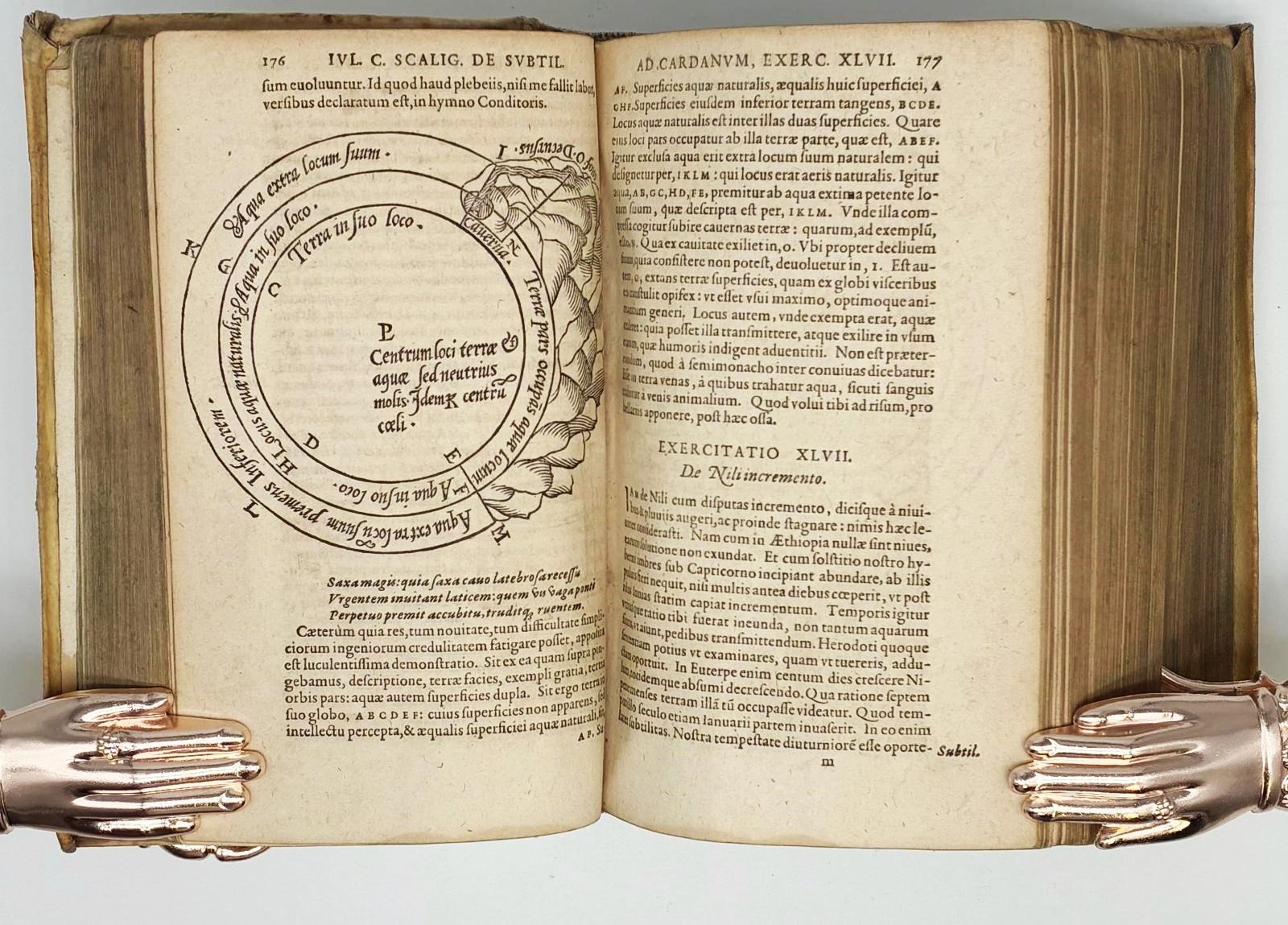
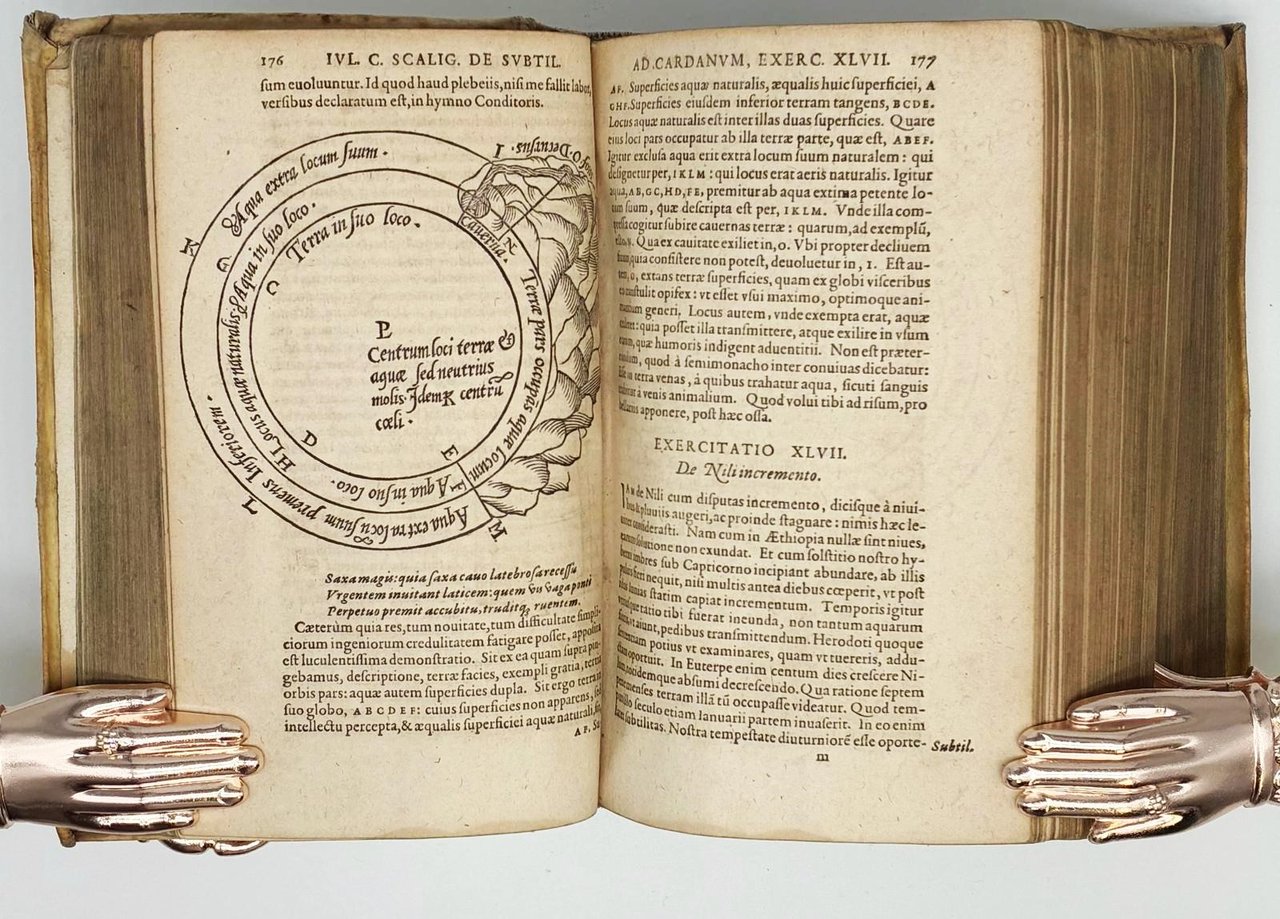
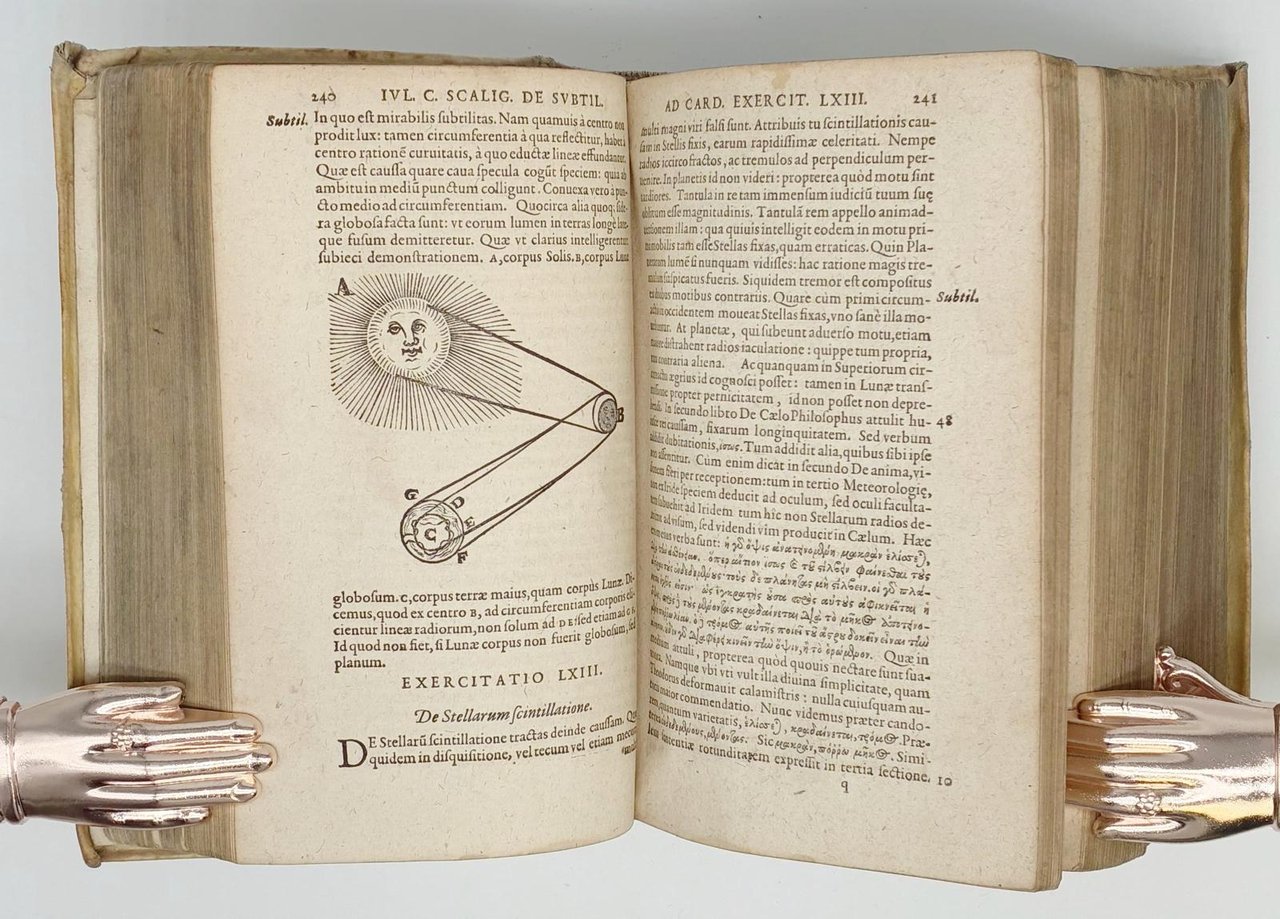
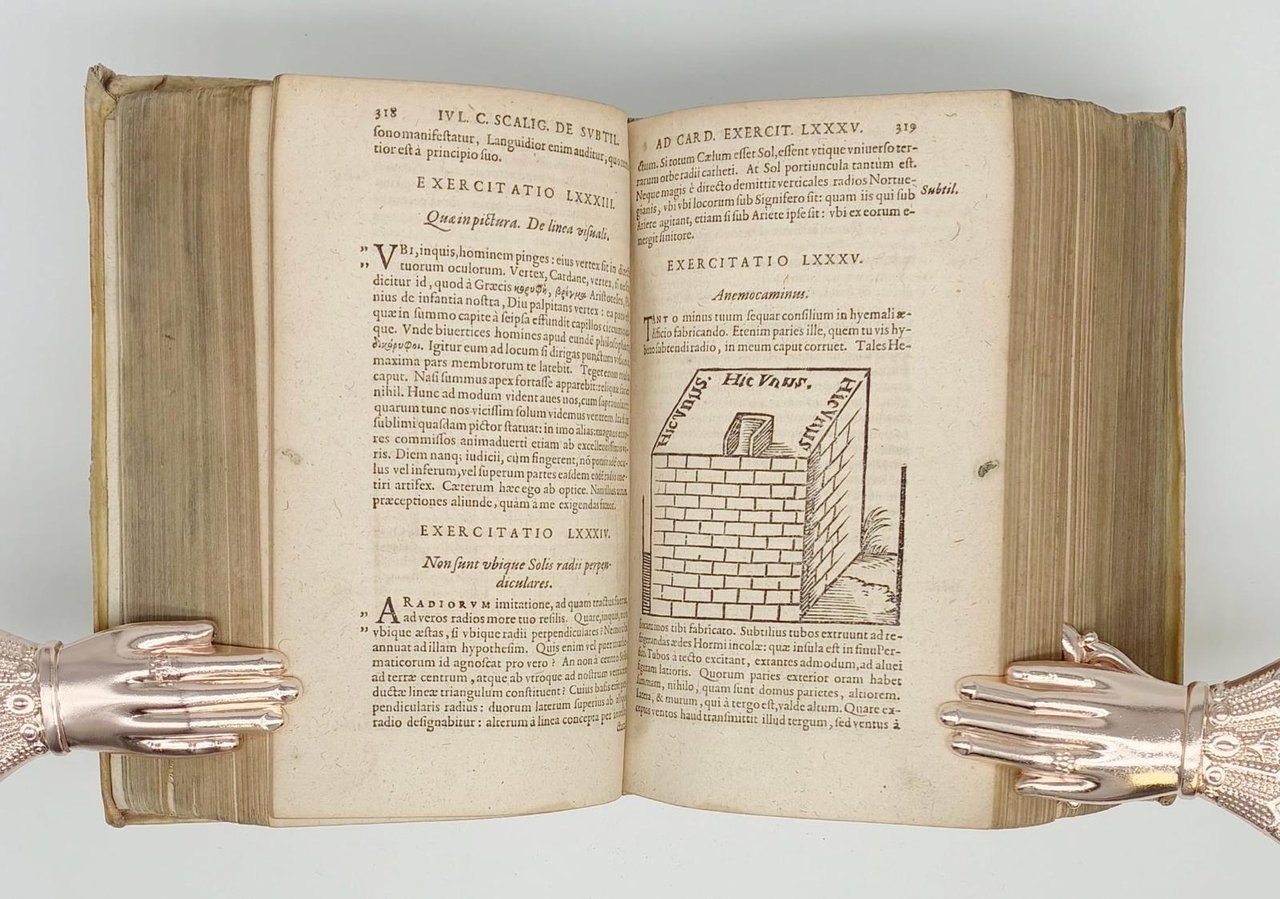
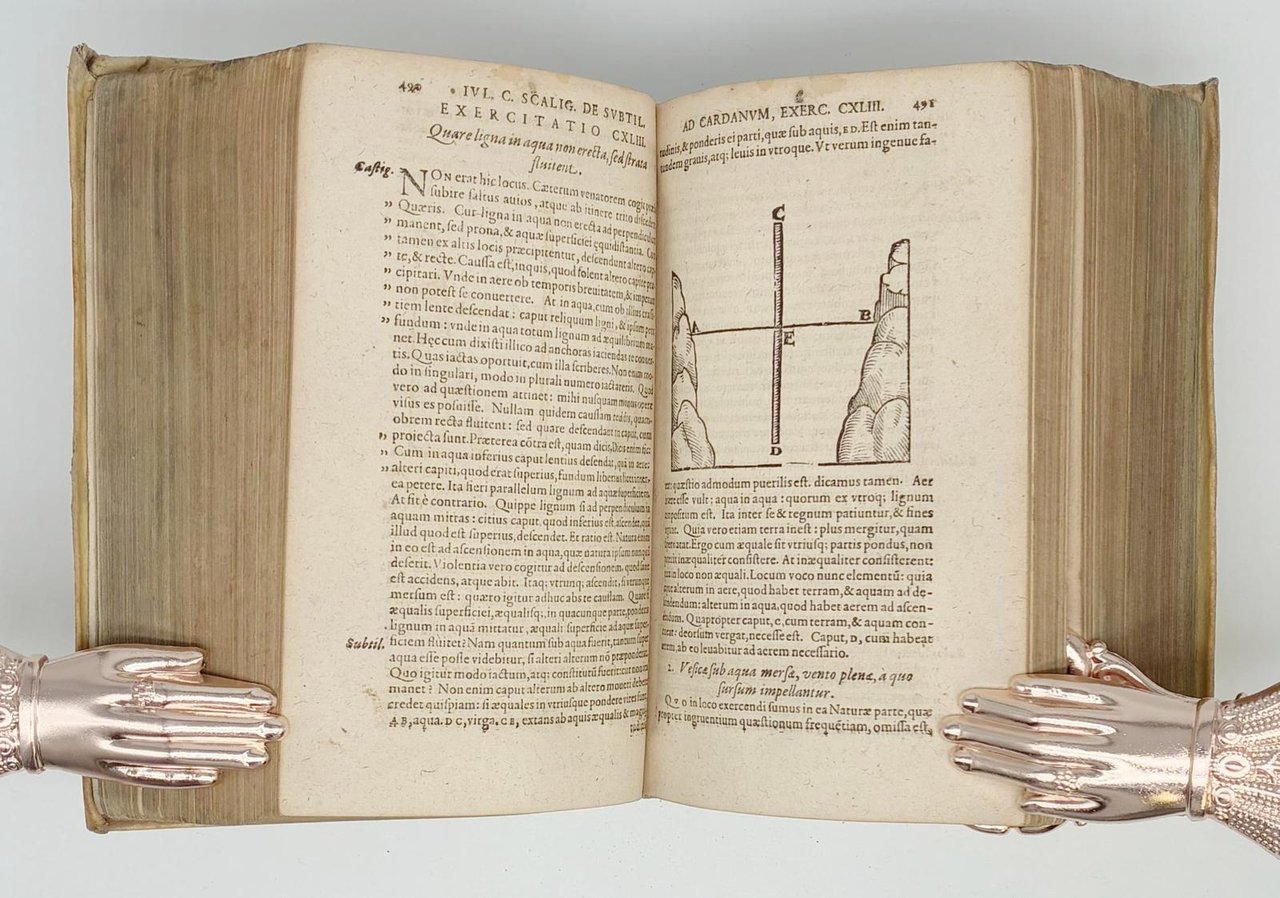
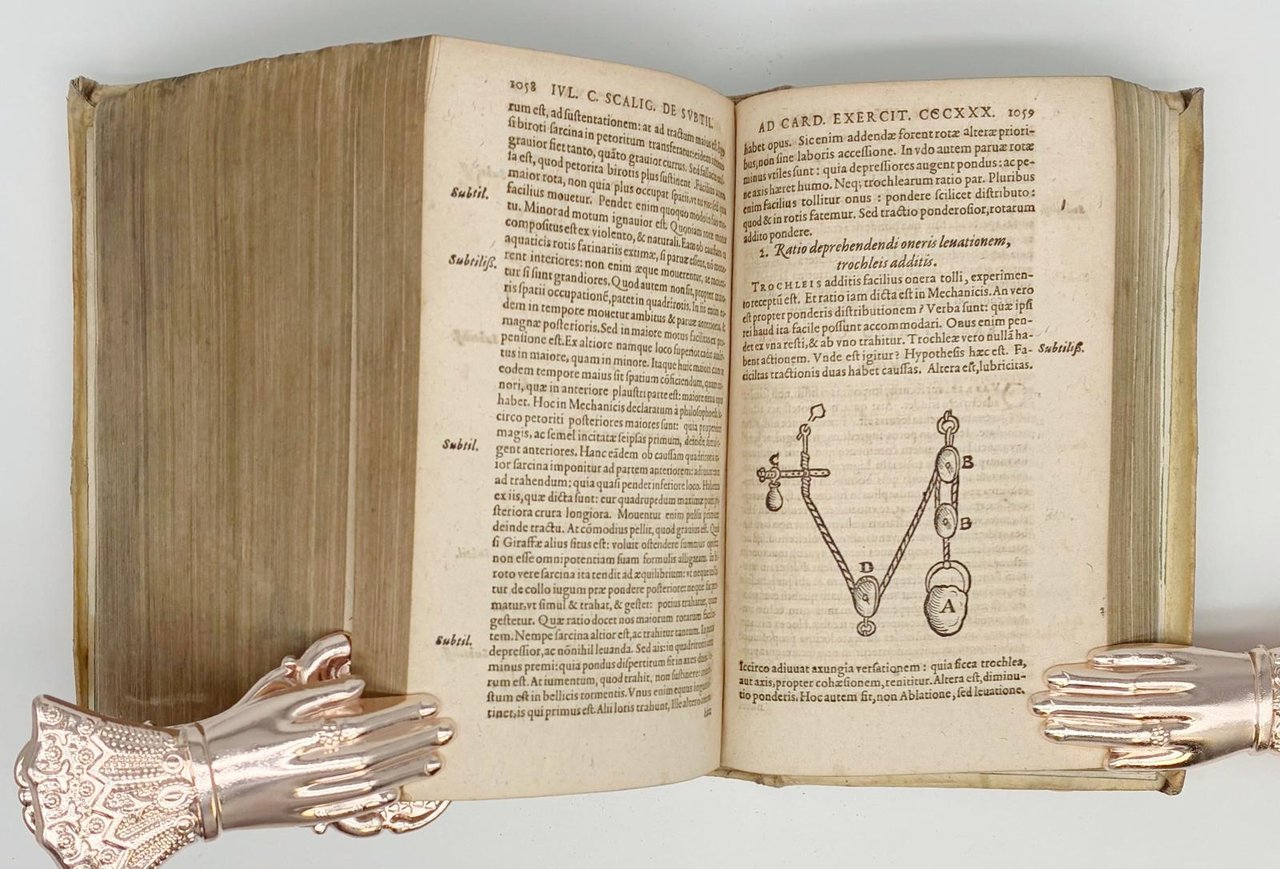
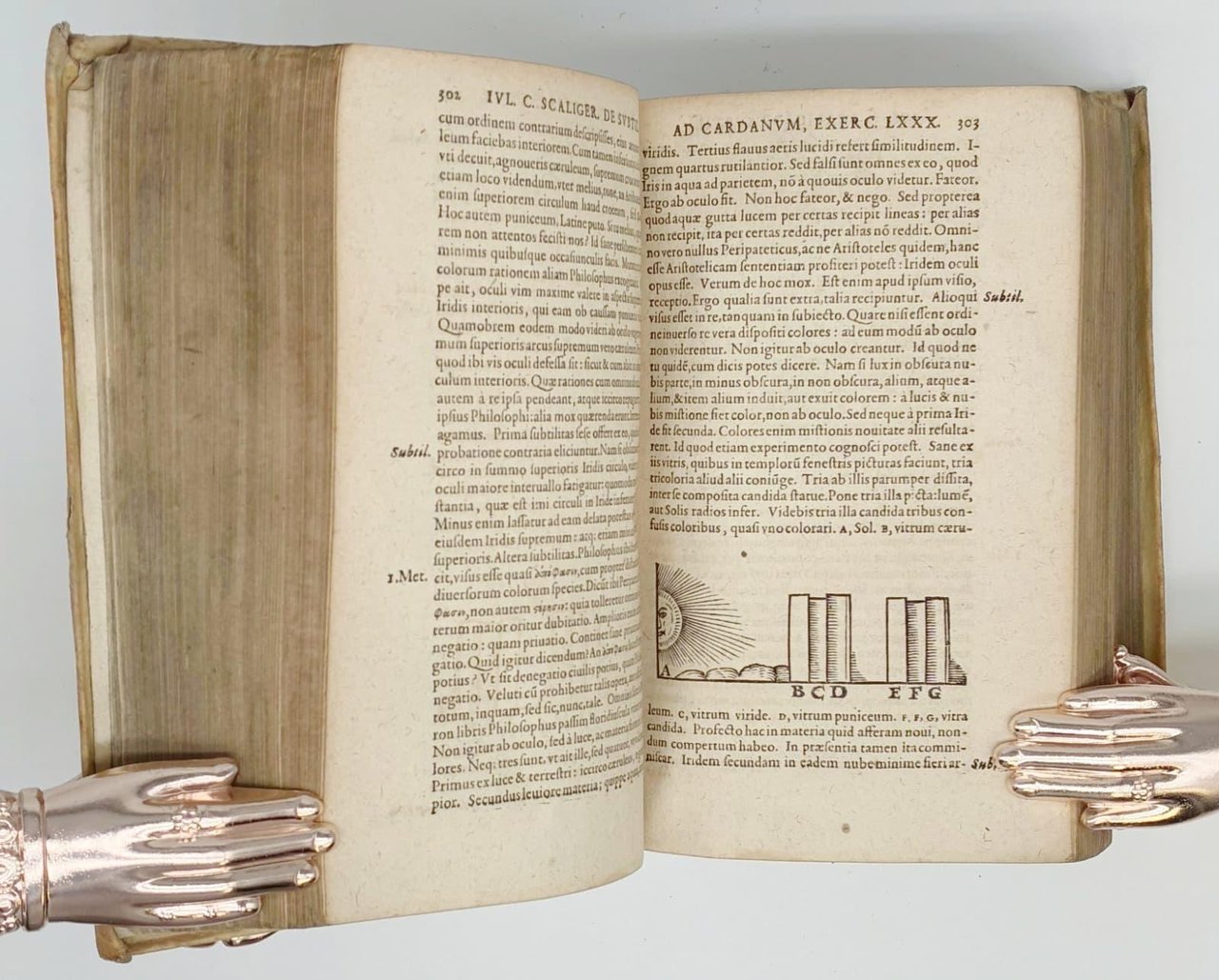
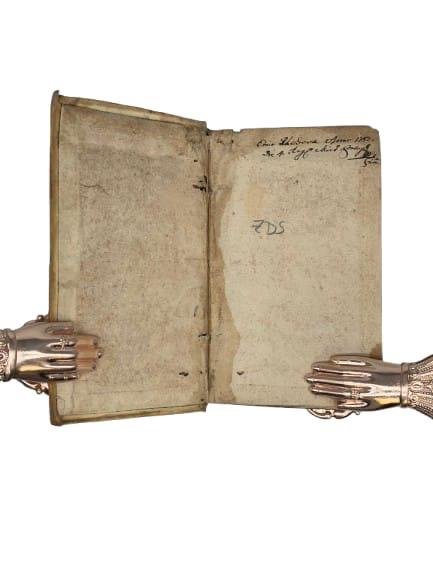
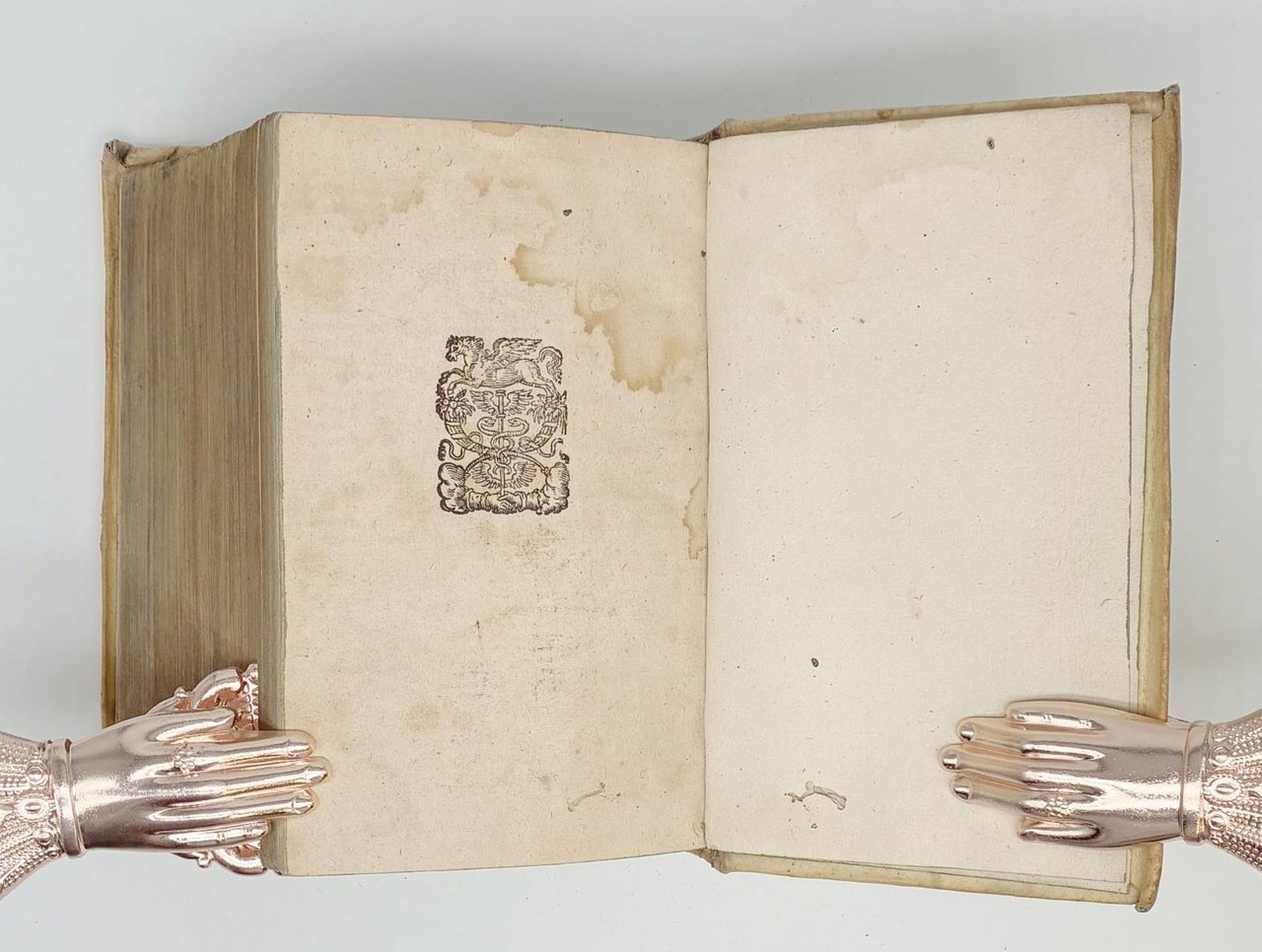
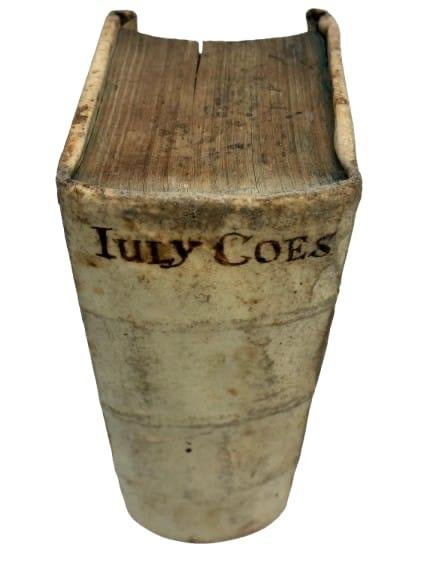
Octavo (16.5x10cm); Pagination: (16), 1130, (92) pp.; Printer's devices at tittle page and colophon, several woodcuts in the text with orbits, machines, experiments. Few leaves browned and a few stains but generally in very good condition. Insignificant wormhole in the last index pages. Headbands in original state. Contemporary limp vellum binding à rabat, spine with three nerves and author's name. Complete.