The Bourgeois: Between History and Literature
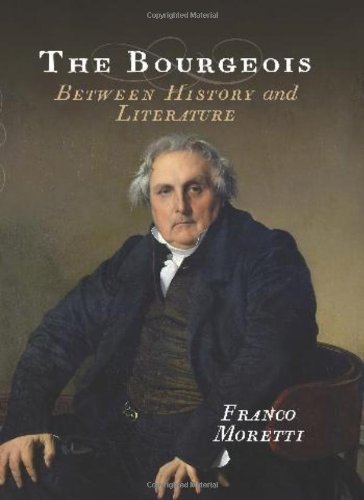
The Bourgeois: Between History and Literature
Metodi di Pagamento
- PayPal
- Carta di Credito
- Bonifico Bancario
- Pubblica amministrazione
- Carta del Docente
Dettagli
- Autore
- Moretti Franco
- Editori
- Verso 2014 First Edition
- Soggetto
- Letteratura
- Descrizione
- As New
- Descrizione
- H
- Sovracoperta
- True
- Stato di conservazione
- Come nuovo
- Legatura
- Rilegato
- Copia autografata
- False
- Prima edizione
- False
Descrizione
8vo, br. ed. pp.228. The bourgeois .Not so long ago, this notion seemed indispensable to social analysis; these days, one might go years without hearing it mentioned. Capitalism is more powerful than ever, but its human embodiment seems to have vanished. 'I am a member of the bourgeois class, feel myself to be such, and have been brought up on its opinions and ideals, ' wrote Max Weber, in 1895. Who could repeat these words today? Bourgeois 'opinions and ideals'--what are they?" Thus begins Franco Moretti's study of the bourgeois in modern European literature--a major new analysis of the once-dominant culture and its literary decline and fall. Moretti's gallery of individual portraits is entwined with the analysis of specific keywords--"useful" and "earnest," "efficiency," "influence," "comfort," "roba"--and of the formal mutations of the medium of prose. From the "working master" of the opening chapter, through the seriousness of nineteenth-century novels, the conservative hegemony of Victorian Britain, the "national malformations" of the Southern and Eastern periphery, and the radical self-critique of Ibsen's twelve-play cycle, the book charts the vicissitudes of bourgeois culture, exploring the causes for its historical weakness, and for its current irrelevance
