Choreographies of Shared Sacred Sites: Religion, Politics, and Conflict Resolution
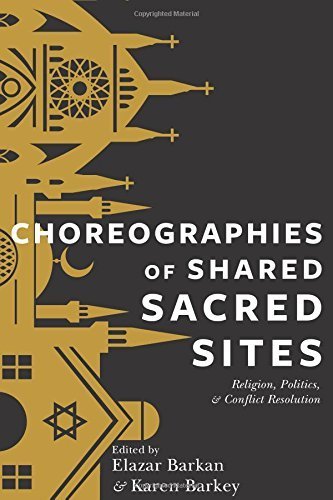
Choreographies of Shared Sacred Sites: Religion, Politics, and Conflict Resolution
Metodi di Pagamento
- PayPal
- Carta di Credito
- Bonifico Bancario
- Pubblica amministrazione
- Carta del Docente
Dettagli
- Editori
- Columbia Univ Press (28 novembre 2014) Collana: Religion,, Culture, and Public Life
- Curatore
- Elazar Barkan , Karen Barkey
- Soggetto
- Turchia Turkey Turquie
- Descrizione
- Very Good
- Descrizione
- H
- Sovracoperta
- True
- Stato di conservazione
- Molto buono
- Legatura
- Rilegato
- Copia autografata
- False
- Prima edizione
- False
Descrizione
8vo, hardcover, pp.428. This anthology explores the dynamics of shared religious sites in Turkey, the Balkans, Palestine/Israel, Cyprus, and Algeria, indicating where local and national stakeholders maneuver between competition and cooperation, coexistence and conflict. Contributors probe the notion of coexistence and the logic that underlies centuries of "sharing," exploring when and why sharing gets interrupted-or not-by conflict, and the policy consequences. These essays map the choreographies of shared sacred spaces within the framework of state-society relations, juxtaposing a site's political and religious features and exploring whether sharing or contestation is primarily religious or politically motivated. Although religion and politics are intertwined phenomena, the contributors to this volume understand the category of "religion" and the "political" as devices meant to distinguish between the theological and confessional aspects of religion and the political goals of groups. Their comparative approach better represents the transition in some cases of sites into places of hatred and violence, while in other instances they remain noncontroversial. The essays clearly delineate the religious and political factors that contribute to the context and causality of conflict at these sites and draw on history and anthropology to shed light on the often rapid switch from relative tolerance to distress to peace and calm.
